Commonwealth Fusion Systems Achieves Milestone in Fusion Reactor Development, Teams Up with Nvidia
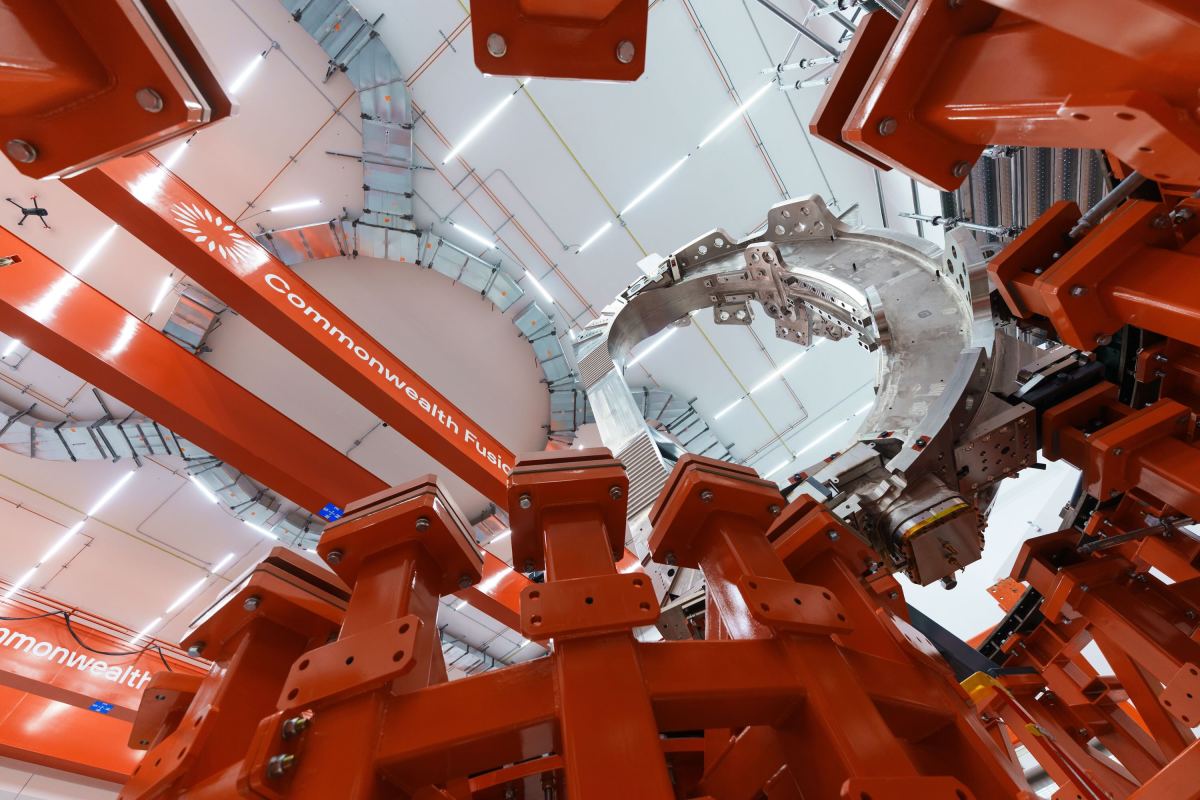
Commonwealth Fusion Systems (CFS) announced the successful installation of the first magnet for its Sparc fusion reactor during CES 2026, a significant step toward operational readiness, expected next year. This initial magnet is one of 18 essential components that will form a toroidal shape to generate a robust magnetic field, aimed at confining and compressing extremely hot plasma. When operational, this plasma could potentially yield more energy than required for its heating and compression.
After years of speculation and setbacks, the prospect of fusion energy is becoming increasingly tangible. CFS, along with other industry players, is competing to deliver the first electrons to the power grid in the early 2030s. If successful, fusion could provide virtually limitless clean energy comparable to conventional power plants.
Bob Mumgaard, CFS’s co-founder and CEO, highlighted that critical components of Sparc’s magnets are nearing completion, with plans to install all 18 by summer’s end. “It’ll go bang, bang, bang throughout the first half of this year as we assemble this groundbreaking technology,” he stated.
Each magnet weighs 24 tons and can produce a magnetic field strength of 20 tesla, which is approximately 13 times more robust than that found in standard MRI machines. The magnets will be installed upright on a 24-foot-wide, 75-ton stainless steel cryostat, set in place last March. To achieve the required magnetic field strength, these magnets will be cooled to -253°C (-423°F), allowing them to conduct over 30,000 amps of current. Inside the reactor’s torus, plasma temperatures will exceed 100 million degrees Celsius.
In a collaborative effort to refine Sparc before its activation, CFS has partnered with Nvidia and Siemens to develop a digital twin of the reactor. Siemens will contribute design and manufacturing software to facilitate data collection for Nvidia’s Omniverse platform. While CFS has conducted various simulations to assess reactor components, Mumgaard noted that the digital twin will synchronize with the physical reactor throughout the construction and operational phases. This integrated approach aims to accelerate learning and experimentation.
CFS’s journey in developing Sparc has involved substantial financial investment, with the company securing nearly $3 billion to date. This includes an $863 million Series B2 funding round last August, attracting investments from major players like Nvidia and Google. Looking ahead, CFS anticipates that developing its first commercial-scale power plant, Arc, will involve additional costs in the billions.
Mumgaard expressed optimism that advancements in digital twin technology and AI could expedite the delivery of fusion power to the grid. “As the machine learning tools advance and representations become more precise, we will be able to accelerate our timeline, which is crucial for making fusion a reality,” he remarked.