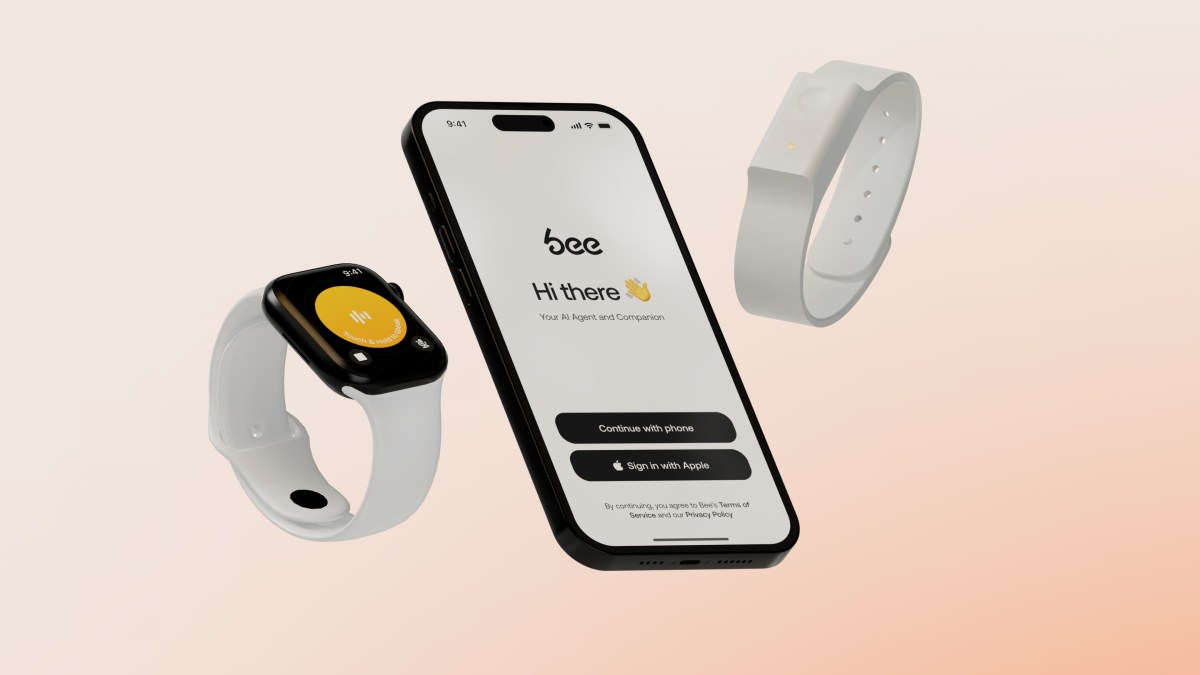
Amazon has marked a significant step in the AI wearables arena with its latest acquisition of Bee, a versatile device designed to enhance everyday interactions. Unveiled during the recent Consumer Electronics Show (CES) in Las Vegas, Bee can be utilized as either a clip-on pin or a bracelet, showcasing Amazon’s commitment to integrating AI into a broad range of consumer products.
Currently, Amazon is prominently known for its AI-driven Alexa ecosystem, with the upgraded Alexa+ version compatible with 97% of the company’s shipped hardware. The addition of Bee positions Amazon to expand its reach beyond conventional home-based devices, venturing into personal AI wearables that facilitate recording conversations during interviews, meetings, or lectures. Bee’s design allows it to serve not only as a recording device but also as an AI companion that learns from user interactions and integrates with services such as Gmail, Google Calendar, and Apple Health.
While some may question the necessity of adding Bee to Amazon’s existing AI lineup—including previous attempts at integrating Alexa into wearables like earbuds and glasses—the company appears to be strategically filling a gap in the market. Co-founder Maria de Lourdes Zollo emphasized that Bee and Alexa can complement each other, with Bee focusing on external environments and Alexa on internal home settings. “We see each other as complementary friends,” Zollo stated, hinting at potential future integrations of the two AIs.
Amazon’s Alexa VP, Daniel Rausch, underscored the unique appeal of Bee, describing it as a “deeply engaging and personal” AI experience. Rausch acknowledged that merging the capabilities of these two technologies would yield substantial benefits for users. “The continuous access to both AI experiences will enable us to serve customers in innovative ways,” he noted.
Bee is designed to adapt to users by analyzing their behaviors and commitments, offering reminders and insights throughout the day. Its current use cases highlight its versatility, proving beneficial for students, elderly individuals with memory challenges, and professionals who prefer not to document every detail manually.
Despite leveraging a similar AI framework to Alexa, Bee prioritizes user privacy by deleting audio recordings after transcription, a feature that poses challenges for playback in professional contexts. Looking ahead to 2026, Zollo hinted at a variety of new developments on the horizon, including additional features such as voice notes and daily insights. The San Francisco-based team is committed to exploring “endless possibilities” as part of Amazon’s expansive ecosystem.
In summary, Amazon’s acquisition of Bee signifies a noteworthy evolution in AI wearables, blending functionality with a user-focused design that could redefine how individuals interact with technology daily.