Apple Expands Agentic Coding in Xcode with OpenAI and Anthropic Collaborations
Apple has unveiled the incorporation of agentic coding capabilities into Xcode with the launch of Xcode 26.3. This significant update, announced on Tuesday, enables developers to seamlessly utilize advanced tools such as Anthropic’s Claude Agent and OpenAI’s Codex directly in Apple’s integrated development environment (IDE).
Available now to all Apple developers via the developer website, the Xcode 26.3 Release Candidate will soon be accessible on the App Store. This update follows the introduction of ChatGPT and Claude in last year’s Xcode 26 release, emphasizing Apple’s commitment to enhancing the tools available for app developers targeting iPhone, iPad, Mac, Apple Watch, and other Apple devices.
H2: Enhanced AI Integration and Features
The integration of agentic coding tools allows artificial intelligence models to leverage the full range of Xcode’s features for complex automation tasks. Models will gain access to Apple’s updated developer documentation to utilize the latest APIs and adhere to best practices throughout the development process. At launch, these agents can assist developers in exploring their projects, understanding structure and metadata, building applications, and running tests to identify and rectify errors.
H3: Collaborations for Efficiency
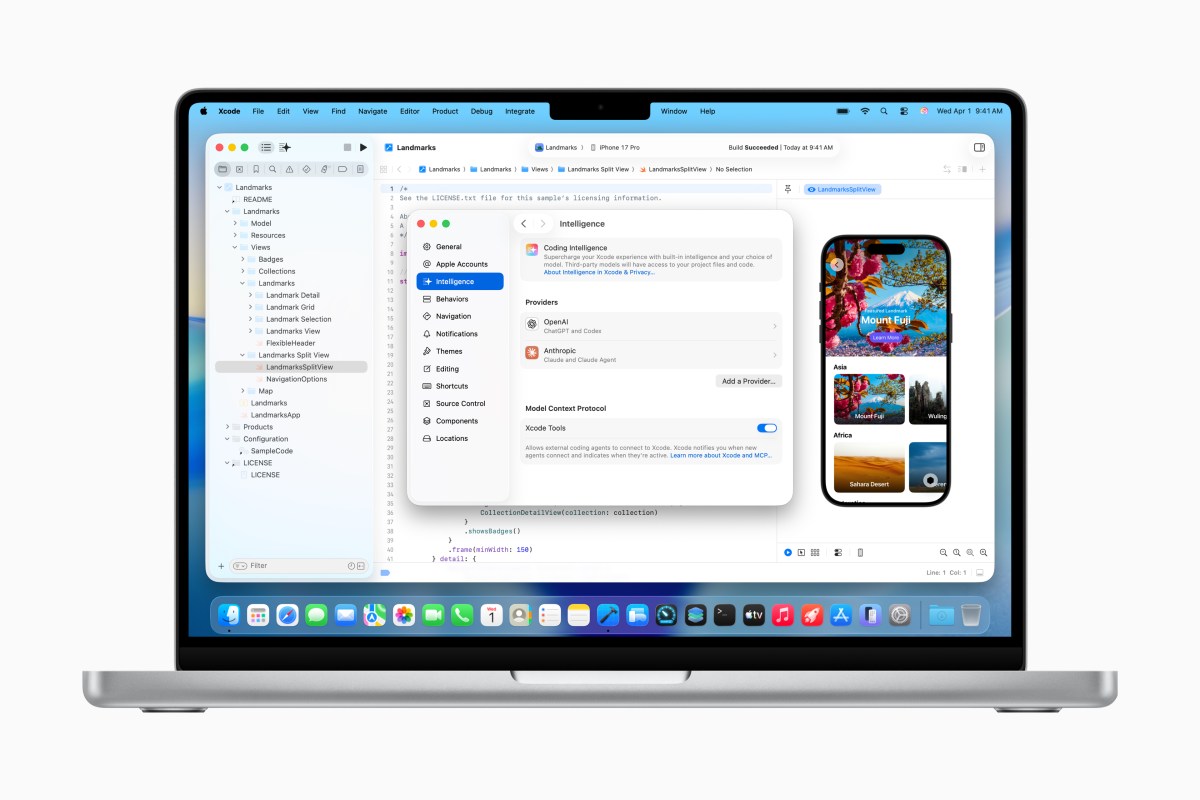
To ensure a smooth rollout, Apple collaborated closely with Anthropic and OpenAI, focusing on optimizing token usage and tool functionality for efficient operation within Xcode. Utilizing Model Context Protocol (MCP), Xcode can now interface with any compatible external agent for tasks like project exploration, updates, file management, and documentation access.
H3: How to Get Started with Agentic Coding
Developers interested in utilizing the agentic coding feature can download the desired agents from Xcode’s settings and connect their accounts with AI providers by entering their API keys. Once set up, a dropdown menu within the application allows developers to select their preferred model version, such as GPT-5.2-Codex versus GPT-5.1 mini.
In the prompt box, developers can articulate desired projects or modifications using natural language commands. For example, they can instruct Xcode to add specific features to their applications, detailing function and appearance.
H3: Transparency and Learning Opportunities
As the AI agent begins its work, it dissects tasks into manageable steps, fostering clarity in what is happening and how the code is evolving. Notably, it references necessary documentation before commencing coding, highlighting changes visually within the code while providing a project transcript for developers to understand underlying processes. This transparent approach is particularly advantageous for novice developers.
To further support learning, Apple is hosting a “code-along” workshop on Thursday via its developer site, enabling users to follow along as they explore agentic coding tools in real-time with Xcode.
H3: Reverting Changes and Testing Code
Once the AI agent completes its coding tasks, it verifies functionality through testing. If any issues arise, the agent can make iterative adjustments to the project. Apple advises developers to encourage the agent to plan before coding, enhancing the overall workflow. Additionally, Xcode automatically saves milestones each time an agent modifies the code, allowing developers to revert to previous versions if necessary.
With this update, Apple continues to empower developers with innovative tools to streamline app development processes, making agentic coding an exciting advancement in programming capabilities.