Elon Musk’s SpaceX has officially acquired his artificial intelligence venture xAI, marking a significant step ahead of what is anticipated to be one of the largest initial public offerings (IPOs) in history later this year. The acquisition was detailed by Musk on SpaceX’s website, where he outlined his vision for an ambitious, vertically-integrated innovation powerhouse combining AI, aerospace technologies, and space-based internet services.
Bloomberg reports that the merged entity is poised for an IPO that could value the company at around $1.25 trillion. Public records from Nevada indicate that the agreement was concluded on February 2, with SpaceX designated as the “managing member” of xAI. This merger represents Musk’s most substantial deal to date, uniting two companies that have seen their valuations soar in recent months. Last year, SpaceX’s secondary share sale valued it at approximately $800 billion, while xAI reached a $230 billion valuation following a $20 billion funding round in January. The acquisition comes shortly after Tesla, Musk’s electric vehicle company, announced a $2 billion investment in xAI.
xAI, founded in 2023 as a competitor to OpenAI, has faced scrutiny from regulators across multiple jurisdictions, including California, Europe, and India, due to concerns surrounding its chatbot, Grok AI. This controversial AI model has been criticized for allowing users to generate explicit content based on non-consenting individuals’ images.
Established in 2002, SpaceX has become a leading private aerospace manufacturer and service provider, notably collaborating with NASA and the U.S. Department of Defense, while also managing the Starlink satellite network, which brings internet to over nine million users worldwide. Recent reports from Reuters estimate that SpaceX generated between $15 billion and $16 billion in revenue last year, with profits nearing $8 billion.
The financial outlook for xAI appears more precarious, as it competes against industry leaders while rapidly expending resources to develop its data center infrastructure essential for large language models. Musk positions the merger as part of a broader strategy to develop space-based data centers that could provide compute power at reduced costs through solar energy. This endeavor would involve launching satellites capable of generating considerable computing capacity, potentially revolutionizing AI model training.
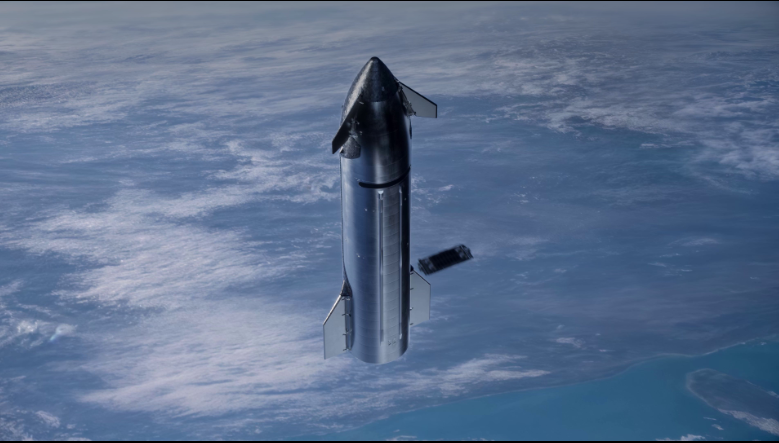
Musk envisions that within a few years, the most cost-efficient AI infrastructure will be located in space, which could accelerate technological innovation and advance scientific understanding. However, the immediate objectives for both SpaceX and xAI differ, with SpaceX focused on proving its Starship rocket’s capabilities for lunar and Martian travel, while xAI aims to establish its foothold in the competitive AI market.
As speculation around further consolidations arises, including possible connections with Tesla, the combination of these ventures reflects Musk’s overarching aim to integrate advanced technologies and pioneer innovative solutions across various sectors.