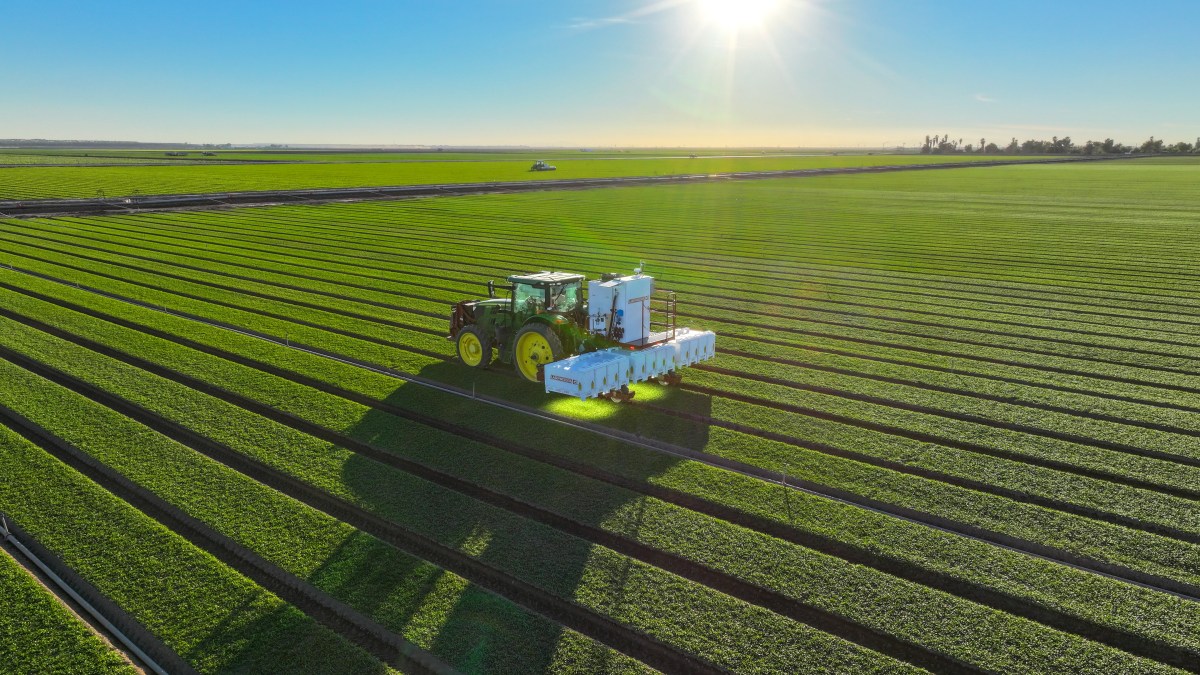
Carbon Robotics Enhances Weed Management with New AI Plant Detection Model
Carbon Robotics, a pioneer in autonomous farming technology based in Seattle, has introduced an innovative AI model known as the Large Plant Model (LPM), designed to revolutionize weed management for farmers. This advancement empowers agricultural professionals to effectively distinguish between crops and undesirable plants, streamlining the process of weed elimination.
The LPM is built upon a vast dataset, trained using over 150 million images and data points captured by the company’s fleet of LaserWeeders across more than 100 farms in 15 countries. This AI model is integrated into the Carbon AI system that serves as the operational core of these robotic weed-killers.
Previously, the process of training robots to recognize new weeds required a significant time investment, often taking about 24 hours. With the introduction of the LPM, farmers can now teach the system to identify new weed species almost instantly, even if the model has never encountered those plants before. “The farmer can interact in real time and specify a new weed for elimination without the need for additional labeling or retraining,” explained Carbon Robotics representative, Mikesell. “The Large Plant Model possesses a deeper understanding of plant characteristics, enhancing its identification capabilities.”
Since its inception in 2018, Carbon Robotics has been dedicated to refining AI technology for agriculture. The development of the LPM began shortly after the company launched its first robots in 2022, drawing on Mikesell’s extensive experience in neural network technology from previous roles at Uber and Meta.
Farmers will be able to access this cutting-edge model through a software update. The user-friendly interface allows them to select images that guide the robot’s decision-making process on which plants to eliminate or protect.
With over $185 million in venture capital funding from prominent backers such as Nvidia NVentures and Anthos Capital, Carbon Robotics is positioned to continuously enhance the LPM by leveraging the influx of new data from their machines. “Our extensive training dataset allows us to confidently assess any plant image for identification purposes, even without prior exposure to that specific plant,” Mikesell added, underscoring the model’s capabilities.
This revolutionary AI tool marks a significant step forward in precision agriculture, empowering farmers to enhance their efficiency and crop management strategies.