LimX Dynamics Inc., a leading Chinese firm in the artificial intelligence and humanoid robotics sector, has successfully secured approximately $200 million in early-stage funding. The financing aims to bolster the company’s innovative pursuit of embodying intelligence in robotics. Key institutional backers for this Series B funding round include UAE-based Stone Venture, Oriental Fortune Capital, and Shenzhen Co-Stone Asset Management, alongside notable industrial investors such as JD.com, Zhongding Sealing, NRB Corporation, and Kyland.
Focused on developing general-purpose legged robots, LimX specializes in both humanoid and quadrupedal designs. The company is pioneering what it refers to as “embodied intelligence,” a specialized form of artificial intelligence aimed at improving robots’ adaptability through interaction-based learning. This approach integrates physical AI, allowing robots to learn from their environments and thus enhance their performance in real-world applications.
Central to LimX’s offerings is its innovative software platform, COSA, or Cognitive OS of Agents. This agentic operating system acts as the “brain” of the robots, providing comprehensive motion control for humanoids. The hardware platform, known as Tron 2, features a modular assembly of limbs and torso, facilitating the creation of humanoid robots tailored for a range of tasks.
LimX has likened the COSA platform’s functions to that of the cerebellum, effectively controlling complex movements to ensure fluidity in motion. This technology reduces mechanical hesitation and jerky movements, enhancing overall dexterity.
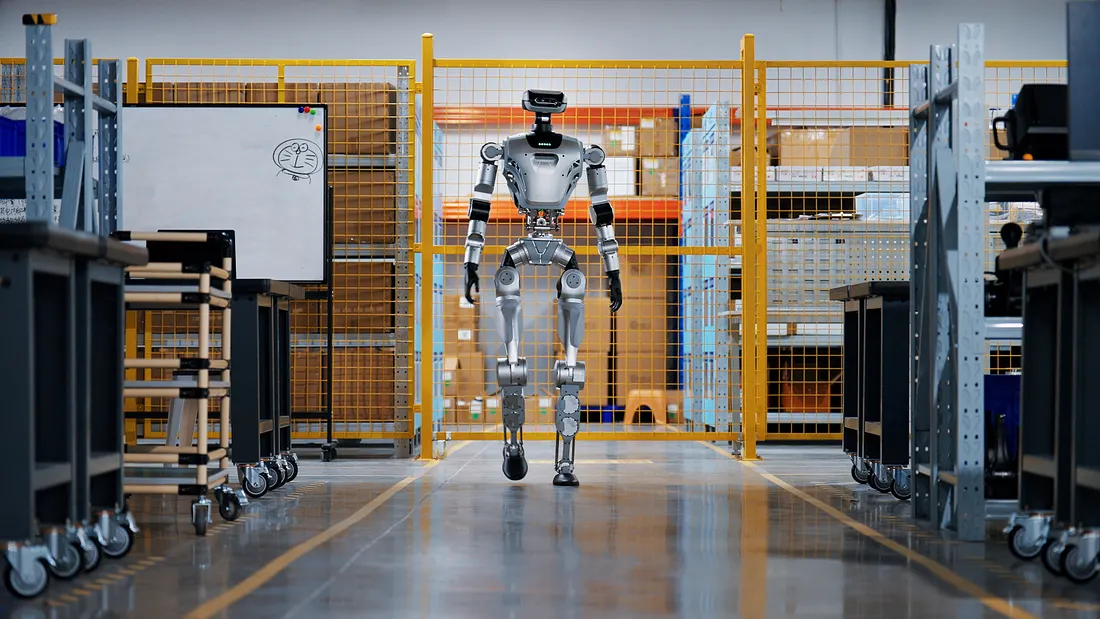
One of LimX’s notable creations is the humanoid robot named Oli, which stands 165 cm tall and weighs 55 kg. Oli’s capabilities include navigating challenging terrains, overcoming obstacles, and manipulating small objects, such as tennis balls. While its movements may appear somewhat unnatural in certain demonstrations, it showcases impressive agility compared to other models currently available in the market.
It is important to clarify that some demonstrations may be staged, highlighting the advanced capabilities of the system in controlled environments. However, further tests reveal the practical challenges that COSA and the Tron 2 platform face, particularly when interacting with dynamic environments.
According to LimX, both the COSA and Tron 2 systems enable a wide range of robotic configurations suited for various applications, including inspection, warehousing, palletizing, and handling hazardous materials, thus allowing businesses to quickly adapt robots for specific operational needs.