Alphabet Inc.’s Waymo LLC, the leading player in autonomous driving technology, is in the process of securing approximately $16 billion through a new funding round, which would elevate its valuation to around $110 billion, according to a Saturday report from the Financial Times.
The majority of this funding is anticipated to originate from Alphabet itself, contributing about $13 billion. Several notable investors, including Silicon Valley’s Dragoneer, Sequoia Capital, and Yuri Milner’s DST Global, are expected to participate. Additionally, Andreessen Horowitz and Mubadala, the investment arm of the Abu Dhabi government, are reportedly set to invest hundreds of millions.
While Waymo has refrained from commenting on the report, the company highlighted its focus on safety and technological excellence. It stated, “With over 20 million trips completed, we are focused on the safety-led operational excellence and technological leadership required to meet the vast demand for autonomous mobility.”
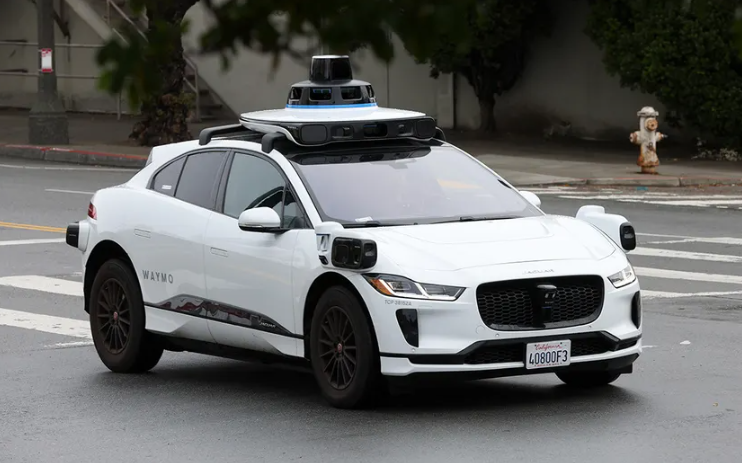
Emerging from Google’s self-driving initiative in 2016, Waymo has distinguished itself as the exclusive operator in the U.S. offering paid robotaxi services without a safety driver. Its fleet, comprising over 2,500 vehicles equipped with advanced cameras and lidar sensors, has achieved “level four” autonomy, allowing it to operate independently of human oversight.
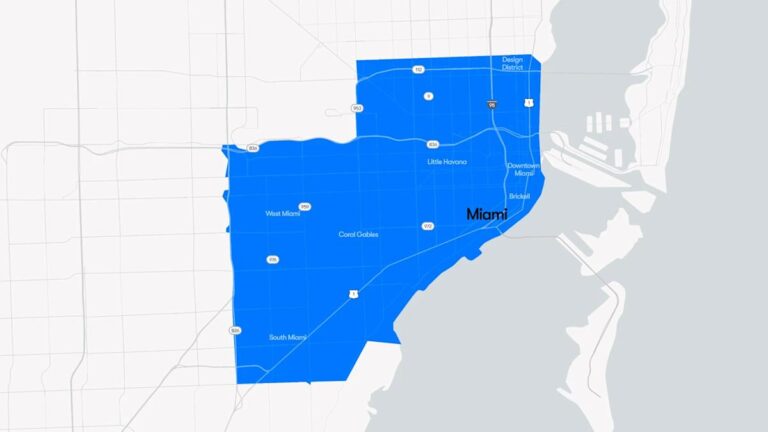
In competition with Elon Musk’s Tesla Inc., which launched its own robotaxi service in Austin, Waymo has logged more than 125 million miles of autonomous driving with minimal safety incidents. The company aims to reach a target of 1 million trips per week this year across major metropolitan areas including San Francisco, Los Angeles, Miami, and Phoenix.
Waymo’s strategic partnerships enhance its market presence, allowing ride-booking through its own mobile platform as well as collaborations with Uber Technologies Inc. in cities like Austin and Atlanta. Future expansions to more U.S. cities, including New York City, and international locations such as London and Tokyo are on the horizon.
Despite its advancements, Waymo recently faced challenges, including a U.S. auto safety agency investigation following a minor injury incident involving one of its vehicles in Santa Monica, California. Additionally, its vehicles have experienced operational issues, such as a full fleet stall in San Francisco due to a power outage affecting traffic signals.
Contrasting its accident history with that of Tesla, which recently faced a court ruling related to a fatal collision attributed to its autopilot technology, Waymo has not reported any fatalities linked to its operations thus far. While Tesla vehicles only achieve “level two” autonomy, necessitating a human presence, Waymo continues to solidify its leadership in autonomous vehicle services.